Tip Geometries
Tip Geometries
Click above for:
Bullet Nose
Pencil Point
Bias or Single Grind
Lancet
Back Bevel
Touhy Tip
Modified Touhy Tip
Crowne Point
Swaged End
Huber
Holes
Click above for:
Ground Notch
EDM Holes
Punched/Back Eye
Drilled/Ground Holes
Angled Notch
Laser Slot
Other Treatments
Click above for:
Echogenic Tips
Etch Mark
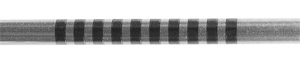
Depth Marks
Notched Stylets
Bent Shaft
Coiled Tubing
Bumps or Indents
Special Coating
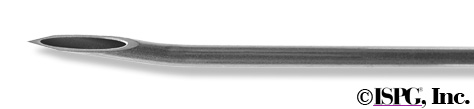
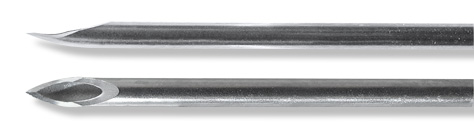
Bent Tip is a cannula bevel which is bent to help shield the heel of the cannula. This helps to prevent coring of the septum in laboratory applications. It is used in stopper piercing, septum piercing, and has other laboratory uses. The amount of bend can be specified. This is sometimes referred to as septum point piercing.
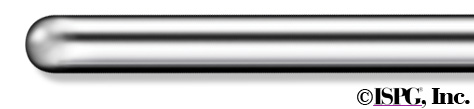
Bullet Nose is also known as Closed End or Bullet Closure cannula. It is used as an obturator and probe as well as for aspiration. The radius of the bullet point can be specified.
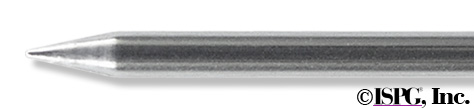
Pencil Point is an atraumatic point. It can be found in a Whitacre Needle as well as in other applications where cutting is not needed or desired. The tip separates rather than cuts tissue. The length, radius and sharpness of the pencil point can be specified.
Single Grinds or Bias Grinds are often used for piercing in non medical applications.
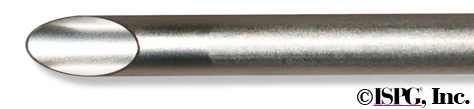
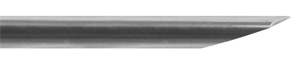
Lancet is a cannula with both the primary and secondary bevel grinds on the front of the bevel. For lancets there are industry standard, approximate, primary bevel angles and names: A-Bevel = 12 degree angle, B-Bevel =18 degree angle, C-Bevel = 30 degree angle.
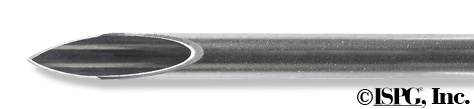
Back Bevel is a type of bevel where the secondary grinds are located on the back of the bevel. Back Bevels are often used in catheter cannula.
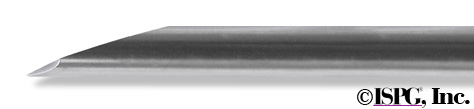
Touhy Tip is a special geometry incorporating a curved, more blunted tip to direct the smooth placement of a catheter for regional anesthesia. Touhy Tips are used with a stylet to reduce coring and tissue trauma.
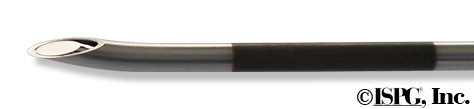
Modified Tuohy Tips have customized geometry for shape, angle, and open surface area since catheters come in a variety of materials and sizes.
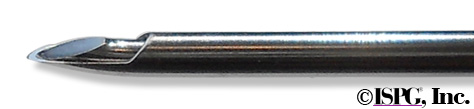
Radial Grind is a cutting angle applied to the outside diameter of a bevel to create a tissue plug for biopsy or other applications.
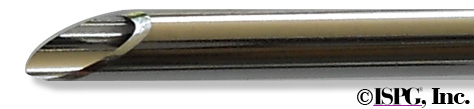
Crowne Point has three bevel grind, rotated equally 120 degrees from each other. 3 points for Cutting, Coring and Drilling.
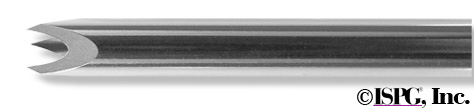
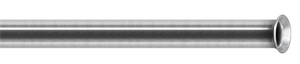
Swaged End is also known as a step or swaged end. It is formed when tubing diameter is reduced by squeezing. Swages are specified by either swage angle or swage length.
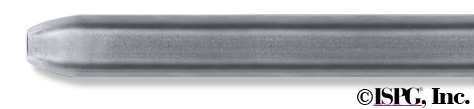
Huber is a specially bent tip specifically designed to deflect pressure from the heel during penetration to prevent coring.